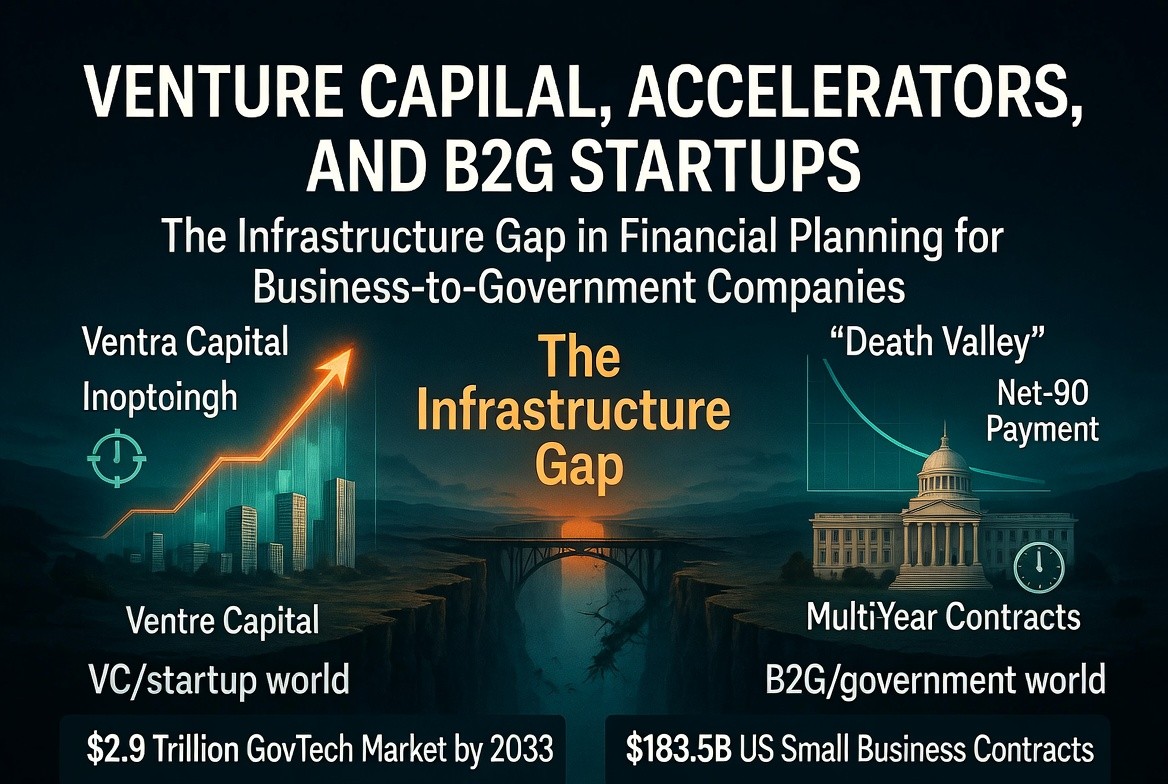
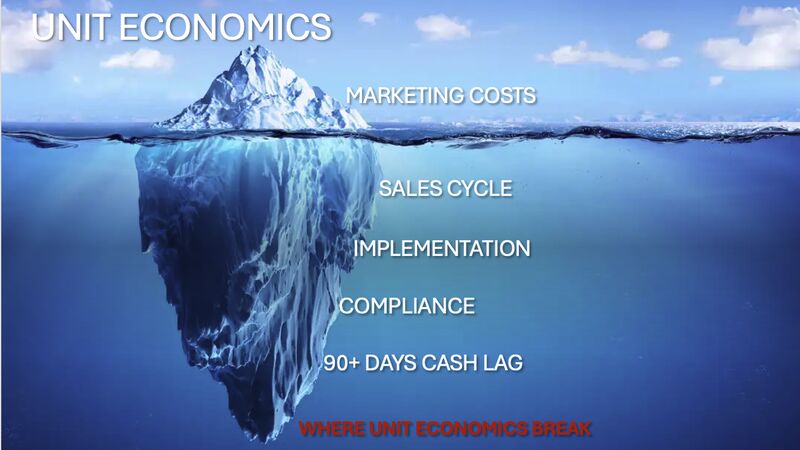
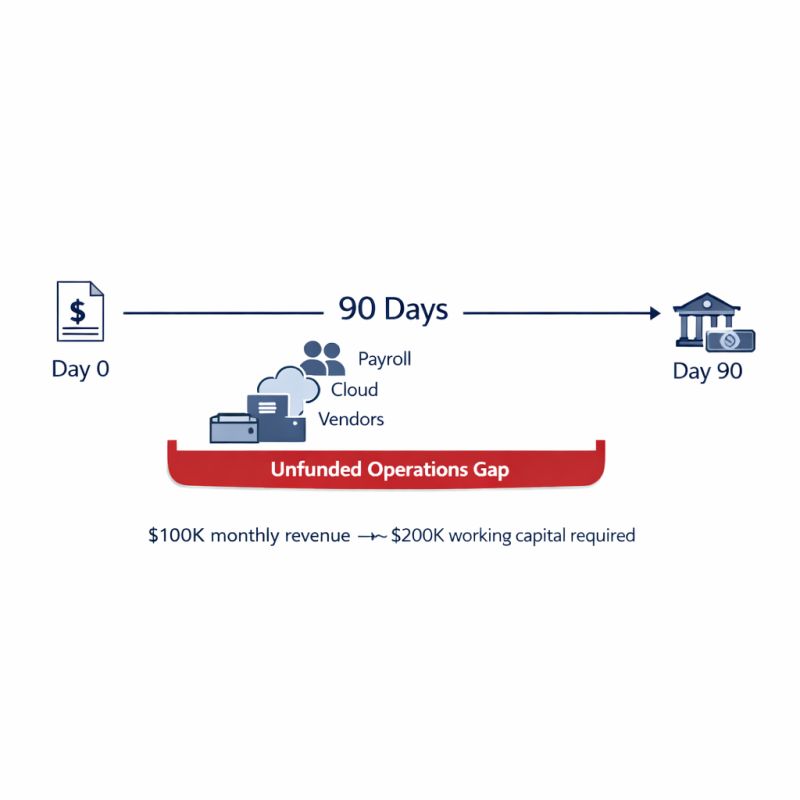
$183.5 billion. That's how much the US federal government awarded to small businesses in FY 2024 — an all-time record. The GovTech market is projected to hit $2.9 trillion by 2033. Funding is surging. Accelerators are multiplying. Government innovation offices are actively seeking startup partners. And yet, B2G startups keep dying. Not because their products fail. Not because the market isn't there. Because the financial tools they rely on — the same MRR-based templates, SaaS churn models, and linear growth projections that work beautifully for consumer software — are structurally incapable of modeling how government contracts actually work. Net-90 payment terms. Milestone-based invoicing. Multi-year commitments. S-curve adoption with 12–24 months of "Death Valley" before revenue accelerates. Working capital gaps that can exceed $500,000 before a single dollar arrives. Standard financial models hide all of this. The result: founders make spending decisions based on phantom revenue. Investors misprice risk using metrics designed for a different business model entirely. Accelerators evaluate companies with scorecards that don't match the operating reality those companies will face. We analyzed 50+ financial planning tools across four market segments. The finding: zero specifically address B2G revenue recognition, contract-based churn, or government payment cycle modeling. Not at the $150K enterprise tier. Not at the $300 template tier. Nowhere. We also examined regulatory requirements from the US GAO, UK Cabinet Office, and OECD — all of which mandate vendor financial viability assessment but offer no standardized framework for early-stage companies. The full report, "Venture Capital, Accelerators, and B2G Startups: The Infrastructure Gap in Financial Planning for Business-to-Government Companies," is a 20-page analytical deep-dive covering the VC blind spot, the accelerator paradox, the regulatory dimension, and what contract-aware financial infrastructure should actually look like.