Sales Planing
Different Revenue Types in B2B and B2G
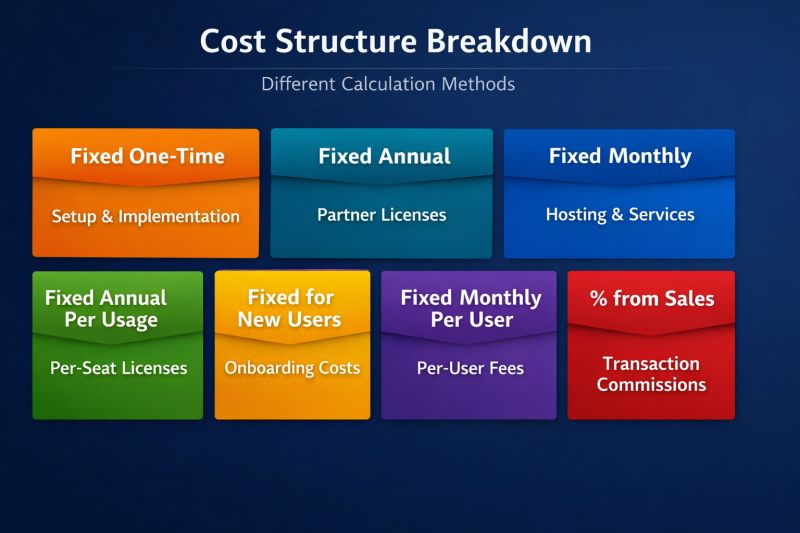
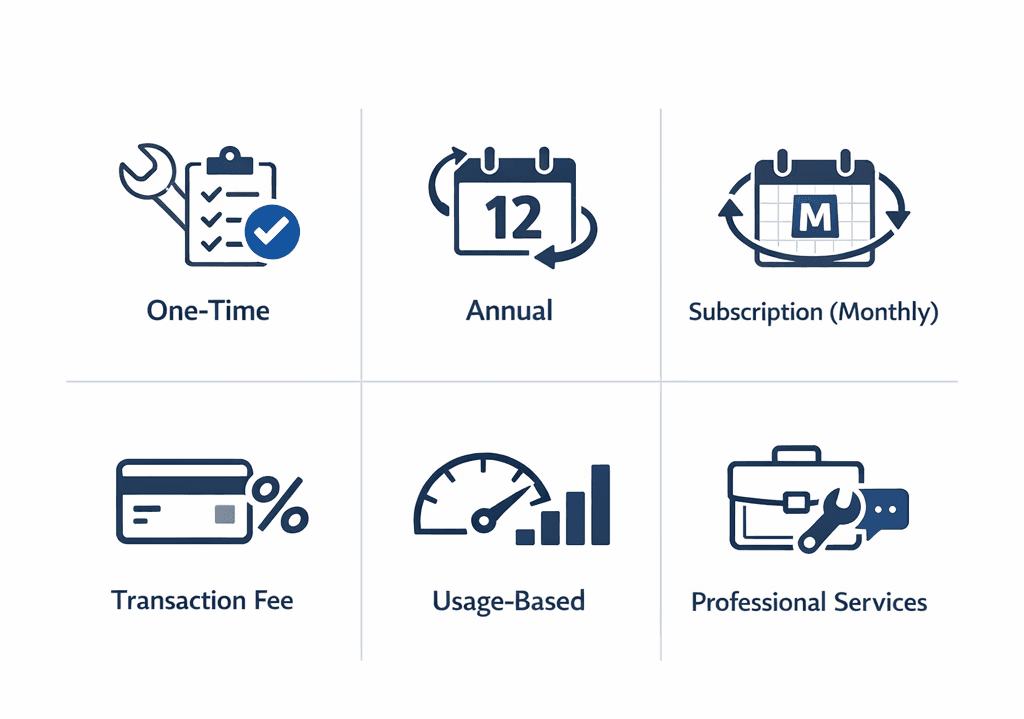
The Verter Studio framework supports six revenue types: one-time fees for setup and implementation, annual licenses recognized over their term, true monthly subscriptions, transaction fees as a percentage of value, usage-based metered revenue, and professional services billed by the hour or project. You can assign different types to different products, different customers, different segments.
2 min read
Different Revenue Types in B2B and B2G
I was on a call with a founder last week, and I asked the usual question: "What's your revenue model?" The answer came back instantly: "Subscription." But as we kept talking, the picture got more complicated. There was an implementation fee at contract signing. Annual licenses that renewed with the contract. Transaction fees on certain features. Professional services for customization. What they called "subscription" was actually four or five different revenue streams with completely different recognition patterns.
This is normal in B2B & B2G. Government and enterprise deals are rarely simple monthly subscriptions. They're complex bundles of products and services, priced differently, paid on different schedules, and recognized over different time periods. The founder wasn't wrong to call it "subscription revenue" — that was the core — but the simplification was hiding important details about cash flow and margins.
Most financial templates force you to pick one revenue model and stick with it. Monthly recurring revenue, annual contracts, or usage-based — choose your adventure. But real businesses, especially in the government space, don't fit neatly into these boxes. You might have one-time implementation fees that recognize immediately, annual licenses that spread over twelve months, and transaction fees that fluctuate based on usage. All from the same customer, all in the same contract.
The Verter Studio framework supports six revenue types: one-time fees for setup and implementation, annual licenses recognized over their term, true monthly subscriptions, transaction fees as a percentage of value, usage-based metered revenue, and professional services billed by the hour or project. You can assign different types to different products, different customers, different segments. The model handles the complexity so you can see gross margin by revenue type, cash flow by payment structure, and unit economics that actually reflect your business.
The point isn't to make your model more complicated for its own sake. The point is that your pricing complexity is a feature, not a bug. It reflects the reality of selling to sophisticated buyers who want flexibility. Your financial model should capture that reality, not pretend it doesn't exist.
→ OneTime: Implementation, setup, onboarding fees
→ Annual: Licenses recognized over 12 months
→ Subscription (m): True monthly recurring
→ Transaction Fee: Per-transaction percentage
→ Usage-Based: Metered consumption
→ Professional Services: Consulting, customization, support
View more articles
Learn actionable strategies, proven workflows, and tips from experts to help your product thrive.